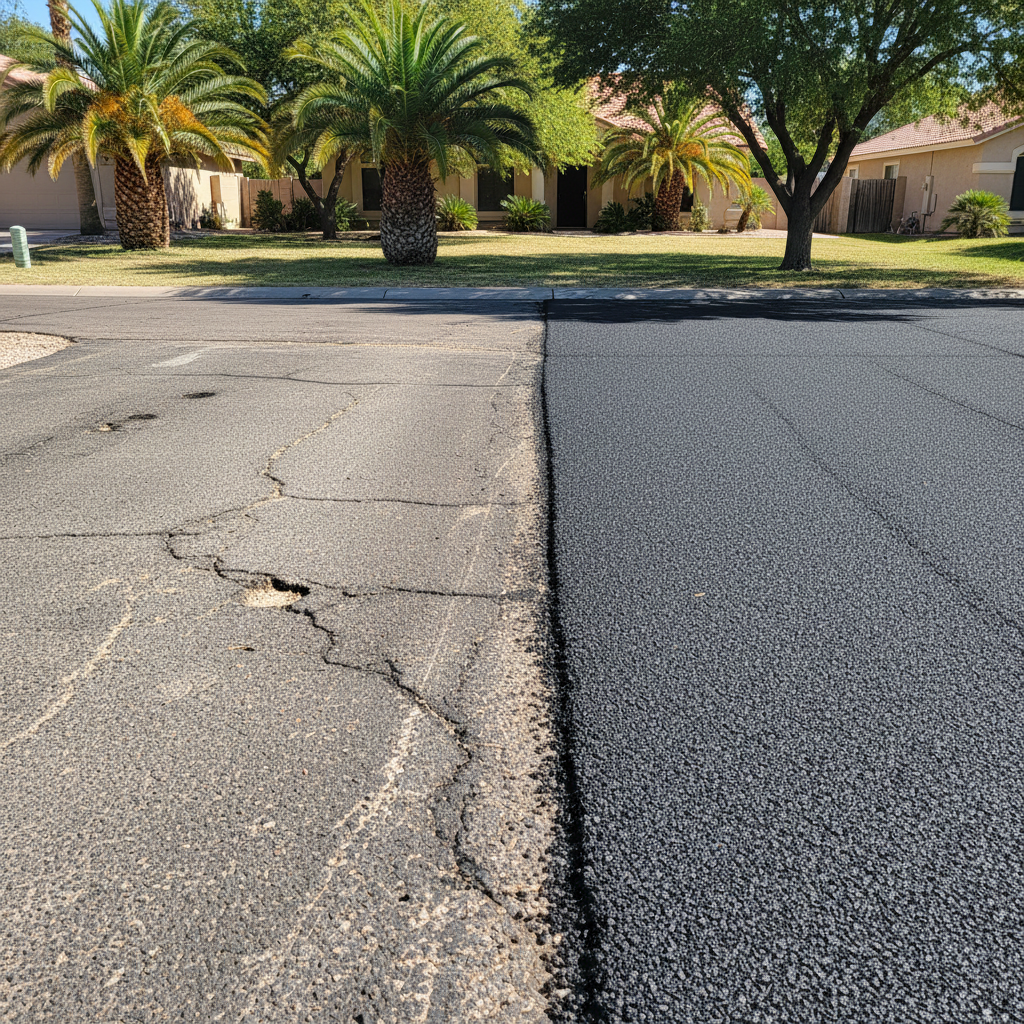
El Mirage Asphalt Paving sees many driveways in the middle of a July heatwave where the surface looks rough, raveled, or completely dried out. The intense desert sun beats down on asphalt day after day, baking the life right out of the binder. When homeowners call El Mirage Asphalt Paving trying to figure out how to fix a worn-out surface without paying for a total tear-out, milling usually enters the conversation. Property owners then run into another choice: standard milling versus micro milling. These methods sound similar, but they leave very different results behind.
The Core Differences in Equipment and Depth
Standard milling is a heavy-duty process used by El Mirage Asphalt Paving. It uses a heavy drum fitted with carbide teeth to chew up the top layer of asphalt, usually removing anywhere from one and a half to three inches. The process is aggressive, loud, and designed to strip away severely oxidized, cracked, or uneven pavement down to a structural layer that can handle a fresh, thick overlay.
Micro milling, on the other hand, is much more surgical. It uses a drum packed with a significantly higher density of teeth spaced tightly together. Instead of gouging deep into the pavement, El Mirage Asphalt Paving uses micro milling to shave off just a thin sliver of the surface—typically a half-inch to an inch. The resulting texture is remarkably smooth, almost resembling a fresh blanket layer right off the bat.
Cost and Material Considerations
When budgeting for the project, standard milling is usually the more common approach for driveways that have underlying surface flaws or need grade corrections to keep monsoon runoff away from your garage. Because standard milling removes more material, property owners are paying to haul away heavier loads of old asphalt and replacing it with a solid, reliable structural lift.
Micro milling can sometimes save on new material volume if you are placing a very thin overlay, but the specialized machinery and careful passes mean the prep work requires high-end precision. If your El Mirage subdivision has tight lot lines and traditional equipment feels too intrusive, the cleaner pass of a micro mill can be very useful, though El Mirage Asphalt Paving will make sure your base is completely free of structural shifting.
Durability Under the Desert Sun
Local conditions make all the difference in El Mirage, AZ. El Mirage soil features a lot of expansive clay and compacted desert sand that shifts when we finally get heavy downpours during the monsoon season. If your sub-base has movement, no amount of surface shaving will fix it. Standard milling allows El Mirage Asphalt Paving to expose the deeper layers, check for soft spots, and lay down a substantial mat that bridges minor base flaws.
Micro milling leaves a very thin profile behind once the overlay is applied. If your existing asphalt has deep thermal cracks or alligator cracking that goes down into the base, a micro mill overlay will act like a temporary patch. The underlying cracks will telegraph right back through the new surface within a single summer cycle.
Appearance and Curb Appeal
Appearance-wise, micro milling wins points for leaving a tight, uniform texture that can sometimes even be left temporarily exposed if schedules demand it, though El Mirage Asphalt Paving recommends getting that seal or overlay down quickly to protect against UV rays. Standard milling leaves a rough, waffle-like texture on the ground before the new hot mix goes down. Once our crew lays the fresh asphalt over a standard mill job, though, it looks just like a brand-new driveway.
If your pavement is structurally sound but just ugly, faded, and rough on the surface from years of baking, micro milling offers a sleek refresh. If you are dealing with actual rutting, low spots where water pools after a storm, or interconnected cracking, standard milling gives you the depth required to reset the grade and reinforce the pavement properly.